• The sacredness of dogs and shopping carts

    In her early days with her dog, Ambrose, and partly due to his apparent swagger of indifference, Jenny tells me she’d underestimated his sensitivity. In frustrating training moments, his gaze often seemed focused off in the distance, she says, “like he was some guy I was boring at a party,” and so she gradually began to raise and sharpen her tone with him. Then one day after she’d been yanked by her end of the leash toward a fleeing squirrel, Ambrose sent her a look of shocked hurt when she snapped at him. It was a “sting of shame” Jenny felt then, she says, and it motivated her to recommit to a more consistently positive approach with her new dog. 

    Before that arm-yanking walk, if anyone had asked, Jenny would have assured them that, yes, of course, her general way of engaging with others was positive and supportive, be they humans or animals. But even though the more “enlightened” feedback she’d learned to provide was relatively gentle, “noticing and acknowledging lack” was still a cornerstone of her approach, she says. The kicker was when she realized that she hadn’t been relating any more negatively to others than she’d been to herself. In short, Jenny came to recognize, she says, that her impatient, brusque dog-training voice was more or less the same as her internal self-talk voice. In fact, she says, the sometimes harsh “correction” she’d begun subjecting Ambrose to was a pretty mild version of how she often spoke to herself. 

    Jenny is careful to explain that, in her case, the most abrasive sort of negative self-talk had, over several decades of practice, mostly softened well before Ambrose came along. This is the “you idiot!” reaction to slamming your finger in the door or after having said something “stupid” during a meeting. In fact, she’d already mostly dealt with this version of her ego, the one in the guise of a verbally abusive parent. But although her self-talk had long since ceased to be chronically and virulently attacking, she says, “a thread of that haranguing voice had remained.” Hearing that voice directed at Ambrose made her more aware of what she was saying and how she was saying, both “in” and “outside” her own head, whether alone or with others. 

    Jenny says that some of the results of this most recent shift have been interesting. For instance, a stranger approached her at a local coffee shop last month to share that she’d seen Jenny at the park “giving your dog a very earnest pep talk.” Jenny didn’t recall that particular moment, but because Ambrose sometimes struggles to remain focused as other people or animals pass by, a “pep talk” is part of their routine: He sits, they connect through the eyes, and she calmly reminds him how capable he is, how much he’s improved, or how well he is doing. She tells Ambrose she believes in him so habitually that she had forgotten how it might appear to other people. 

    An odder aftereffect of her more positive training approach occurred at a grocery store when Jenny had tugged a shopping cart free from its corral, inadvertently crashing it into its neighbors. “Excuse me,” she said out loud in her gentle Ambrose-voice to the cart, to all the carts. At first, Jenny says, she laughed at herself: “Is this who I am now?” Had she become incapable of distinguishing animate beings from mere objects? But then she concluded, that, if so, “maybe that’s a good thing.” Whereas her previous default was to criticize, or even curse, her natural inclination now is to be sort of indiscriminately respectful to whatever shows up in her world. 

    It’s no accident that so many wisdom traditions include some protocol for acknowledging, or even blessing, mundane things and ordinary activities. Sometimes this is a means of creating a special status for the object, such as the sanctification of wine in preparation for communion. But it can also serve to recognize the always already sacredness of the ordinary, as with the Japanese tea ceremony. This ritual is, in part, a reminder that our sacred power rests in the quality of compassionate presence we bring to our relationships with (apparently) other beings and objects (whoever/whatever they may be). It’s a perspective that challenges the traditional, hierarchical Western that places god and angels above all else. Philosophy aside, though, what a friendly, generous way to co-exist with ourselves, other people, dogs, and shopping carts. 
  • When a rescue dog adopts a meditator

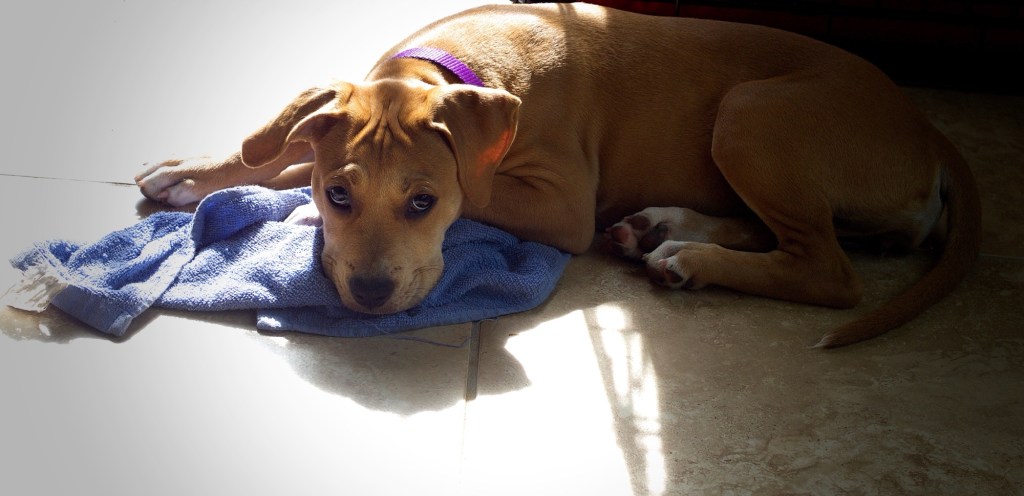
    In the cathedral of my morning, only the laptop screen illuminates my hands as I begin to click out letters to make meaning. But then I am jarred by the sound of gnawing. Here I have shown up, habitually earnest, like a monk who has risen for matins. But something has changed, because there is that gnawing sound. And so I crane my neck to peek into the next room to confirm that my new big puppy is still on task with his purple pig. And then, satisfied, I return to the keyboard. But where was I? What was I groping for? What was important enough to pull me from my warm bed?

    But now the gnawing sound has stopped altogether and I am truly concerned because I do not know him all that well yet, this pointy-eared new roommate. He may simply have fallen back asleep, but maybe he’s crept off, bored, to find a shoe or a distant table leg. All week long in this first week with him, I’ve been impressed the ways he finds to use his monkey mouth. And so I abandon my keyboard again to investigate and discover that everything is fine. But is it? When I decided to adopt this dog, I told myself nothing significant would change. That I would still be the same morning writer and meditator. But I do not return to my laptop. Instead I plunk down on the floor half-lotus and the big galoot flops into my lap, rubbing his sleepy eyes on my thigh and falling quickly into a dream.

    I am stuck here now and my morning plan is in disarray. No problem, I tell myself, because I am disciplined but not rigid. I will be flexible. Yes, I can do that. As his breath deepens, I follow my own breath and drop in. I straighten my back and focus on the air flowing through my nose but quickly become hijacked by the thought that I’ve been trapped. by this big baby, this little beast. He who cares nothing about my essays, mindfulness practice, or worthiness. He who dreams now of his mother’s milky, warm belly, of herding sheep, of roaming alone on some ancient savannah. But because his body breathes more deeply, so does mine.

    And then my hand rises with a will of its own to stroke the silky ridge between his ears, and another thought arises. I do not entertain chasing it away or even examining it very thoroughly. It’s not a thought of gratitude or acceptance or detachment. It’s not about liberation or compassion or doing the right thing. It’s more like a mantra, just two words to contain all that wants to be said and done. “Good boy,” I whisper as I lean back against the sofa and join my puppy in his dreamland.

    If you’d like to be notified by email of new posts, hit the menu button above to find the link to subscribe.

  • The invitation of downdog: finding the strength to rest

    Downward Dog is a restorative pose for experienced practitioners, but can be hard work for beginners. — Wikipedia

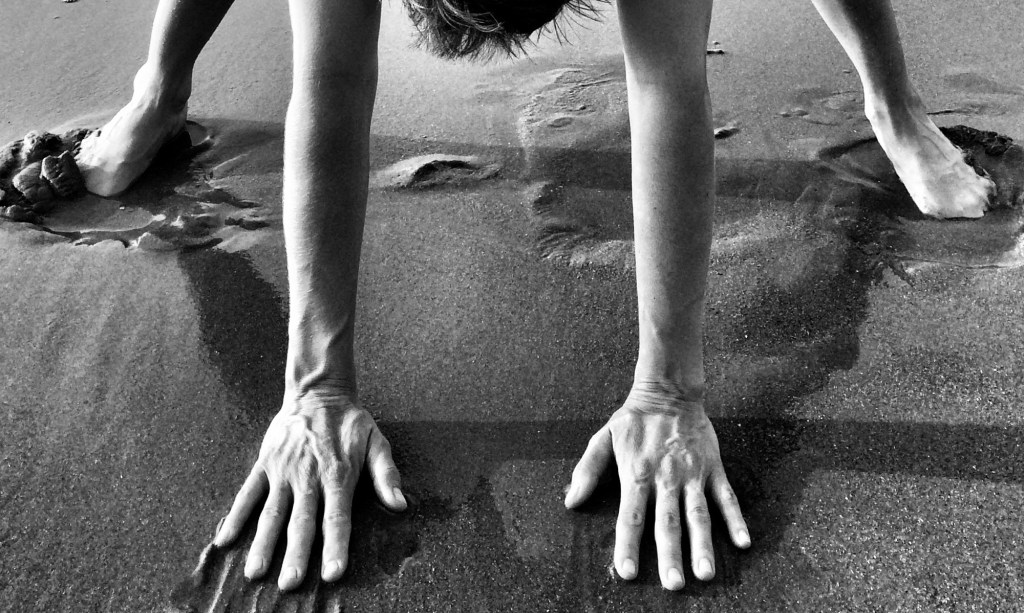
    I was first introduced to downward dog by a yoga teacher who made all sorts of pleasure noises as she guided us into the pose: “hips toward the sky, arms outstretched, long back, neck relaxed, hands planted, fingers spread. Plug yourself into the earth through your palms and soles.” But there was little about it that I found pleasant. There was too much weight on my arms as I struggled to find some equilibrium, and I couldn’t figure out how other people could keep their feet flat without bending their knees. “Join me in downward dog,” the teacher would say, or, “Relax into downward dog.” She presented it as a reward, but for me it was mostly just one more hard, awkward pose in a string of such poses. I usually found myself obsessing over the instructions (wanting to please my teacher), or losing myself in random thoughts to distract myself from my discomfort.

    At some point, I began to learn the rhythm of the flow well enough to actually sort of settle into my downward dog. And I got strong enough that I could begin to trust my core — the long, deep center of my body — so I wasn’t relying as much on my shoulders and arms to carry the burden. My first inkling of downward dog as a truly restorative possibility, though, came when I took a course on the Ashtanga series, a prescribed set of poses in quick succession with a reputation for being challenging. The combination of strength, flexibility and discipline it demands is legendary and I knew I was underprepared going in. But I had wise, skillful and compassionate teachers, so I went for it.

    I know that some criticize the Ashtanga series for the rigidity of its sequencing and its punishing pace. And, yes, the scripted nature of the asanas, some of them impossibly difficult — for me, at any rate —placed it in stark contrast to the “relaxing flow” yoga that one might seek at the end of a tough workday. But, paradoxically, it was in this Ashtanga class that I first discovered the sweetness of downward dog, partly because, in the context of the overall difficulty of the class, it was so easily distinguishable as an oasis.

    And because there was a recipe book of sequences, I did not need to wonder what my teacher was going to throw at me next. This particular pose became a welcome opportunity to breathe (literally) and, somehow, also, to feel myself sinking into the source of breath itself. Downward dog began to reveal itself to me — as gentle, familiar and restorative — only against that backdrop of unprecedented physical challenge and regimentation. So even though part of me dreaded my Ashtanga sessions, I also loved them. Especially when, after just a few weeks, I could feel myself growing stronger and more flexible across the full expanse of my body, from the muscles in my toes to those in my fingers, from the back of my neck to the joints in my ankles.

    Paradoxically, the growing power and mobility of my body allowed me to see that the true strength required for me to fully relax into this pose would go well beyond the physical. For, ultimately, the great invitation of downward facing dog is that one be present, neither reliving the last asana or fretting about the next one. Coming to trust the strength of one’s body is, no doubt, a critical step. But learning to fully be here now for the few seconds or minutes that the pose lasts — without being swept away by the addictive self-talk of planning, judgment or fantasy — turns out to be much harder. We may be able to brute force ourselves forward through the demanding twists and flows, but it is in the so-called “resting” poses that we may face our greatest challenge.

    It may be obvious that I am not just focused on downward dog here. Rather, it is the very “discipline of rest” that I am considering, including the many ways there are to stay “busy and productive” long after all requirements for life-sustaining activity have been fulfilled. I’m thinking about how we may be praised by others, and how we may applaud ourselves for propelling ourselves insistently forward in the name of “achievement” and “self-improvement.” Even those of us who include lots of “me-time” activities like yoga, meditation, and nature walks may treat these too as mere tasks to be completed on our “disciplined” quest for a “healthy” or “spiritual” life. 

    It is our right, of course, to delude ourselves into believing that this current moment can be outrun or outwitted through such spiritual busyness. But it’s a self-deception that becomes much harder to maintain in the liminal gap of the in-between. That negative space in the photograph, those pauses between musical notes. This resting asana planted like a bridge between an imagined past and a future that will never arrive.

    In gratitude to the “wise, skillful, compassionate” teachers I mention above, especially Mona Ceniceros and Melanie Williams at Sun Moon Yoga in Minnesota.

  • An invisible human with an invisible dog

    The first dog I had as an adult was spectacular, an enormous, mostly black Malamute. Adults gawped, and kids would sometimes ask from a respectful distance, “Is he a wolf?” Though it’s been decades, there are people in that town who still remember me as that magnificent dog’s companion, folks who recall the tableau of that singular dog accompanied by a young woman with a long ponytail.

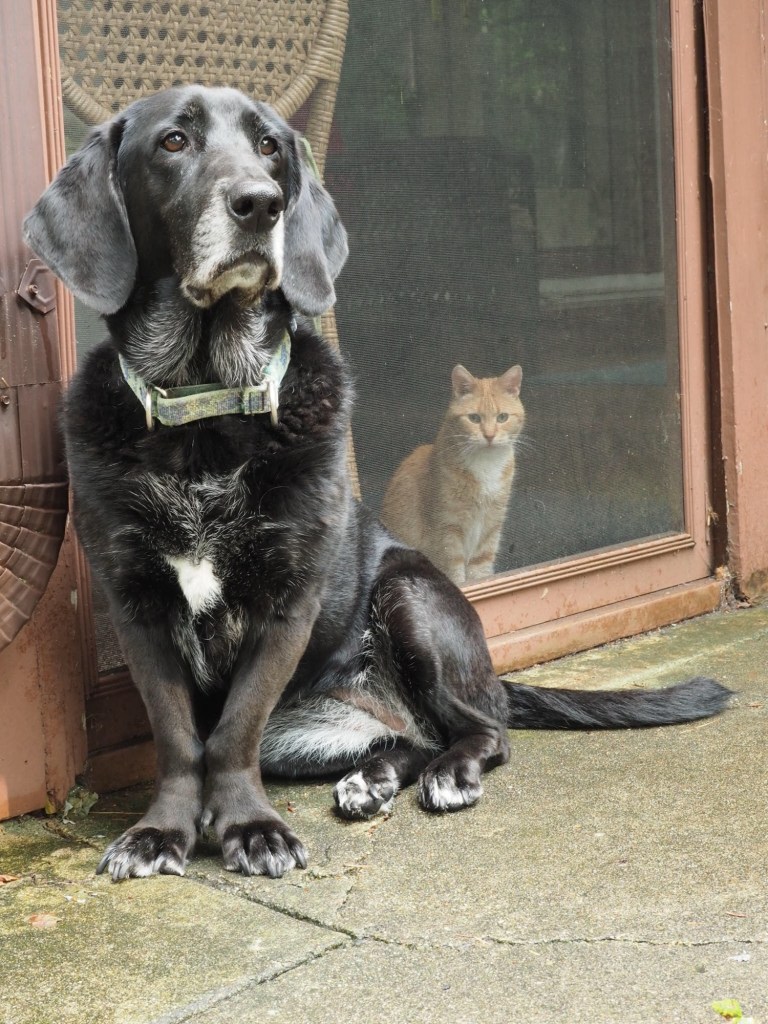
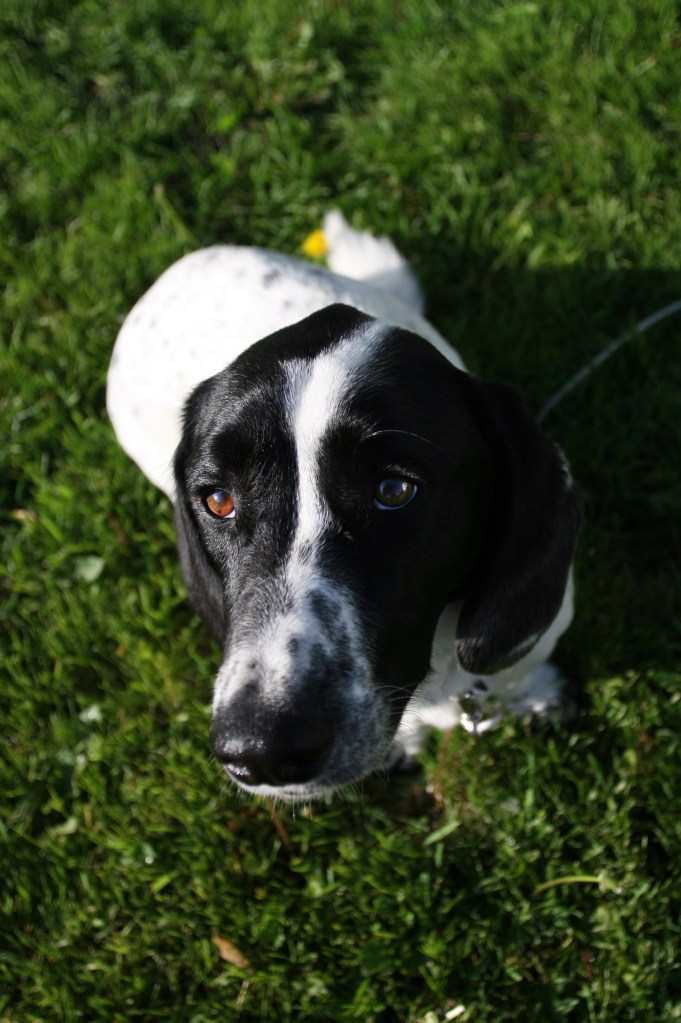
    A decade after he died, I paired up with Olive, a comic mix of Basset Hound and Springer Spaniel. With her astonishingly long body and stubby, knobby legs, Olive was a local novelty. Schoolchildren laughed openly as she passed, and people slowed their cars to crack a joke or share that they’d seen some other dog once, somewhere, who looked sort of like her. For a few years after she died, neighbors still asked about her, the funny dog escorted by a middle-aged woman in a ball cap. This was sometimes me, and sometimes my partner, but that detail was irrelevant because Olive was the undisputed star of the circus.

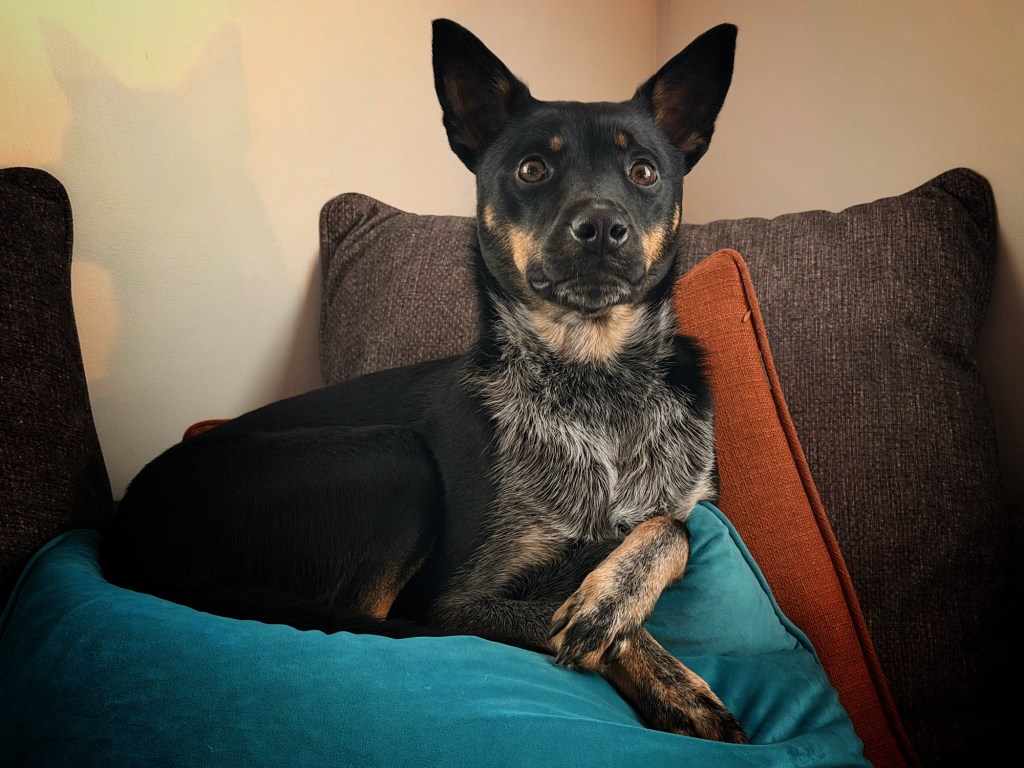
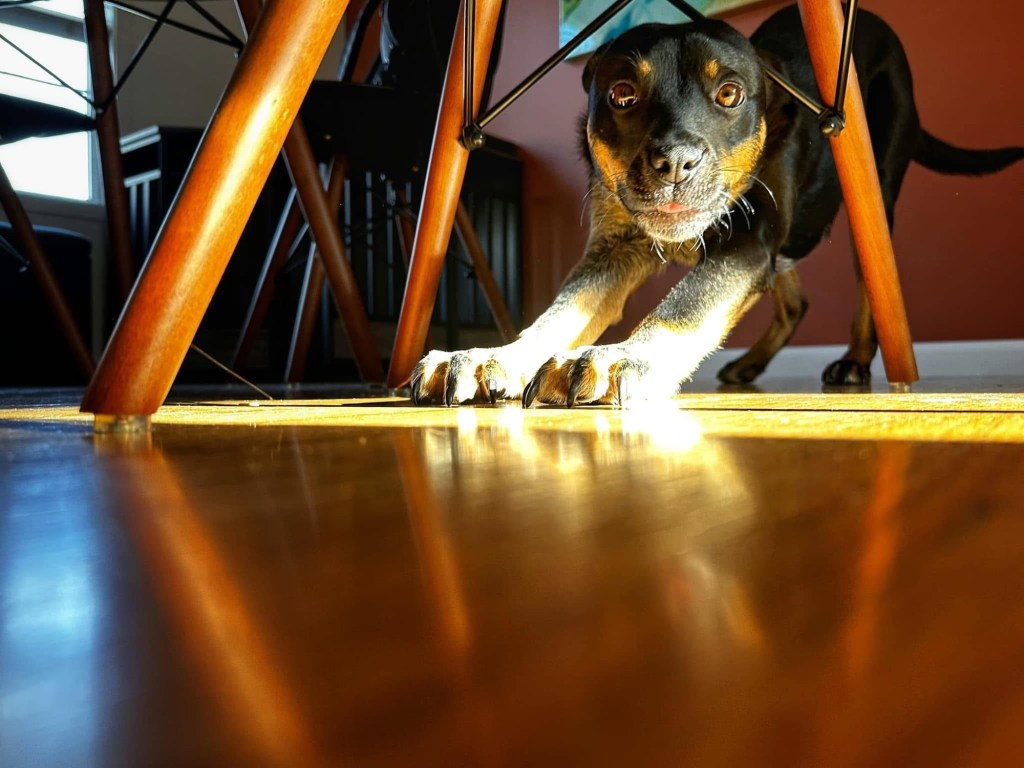
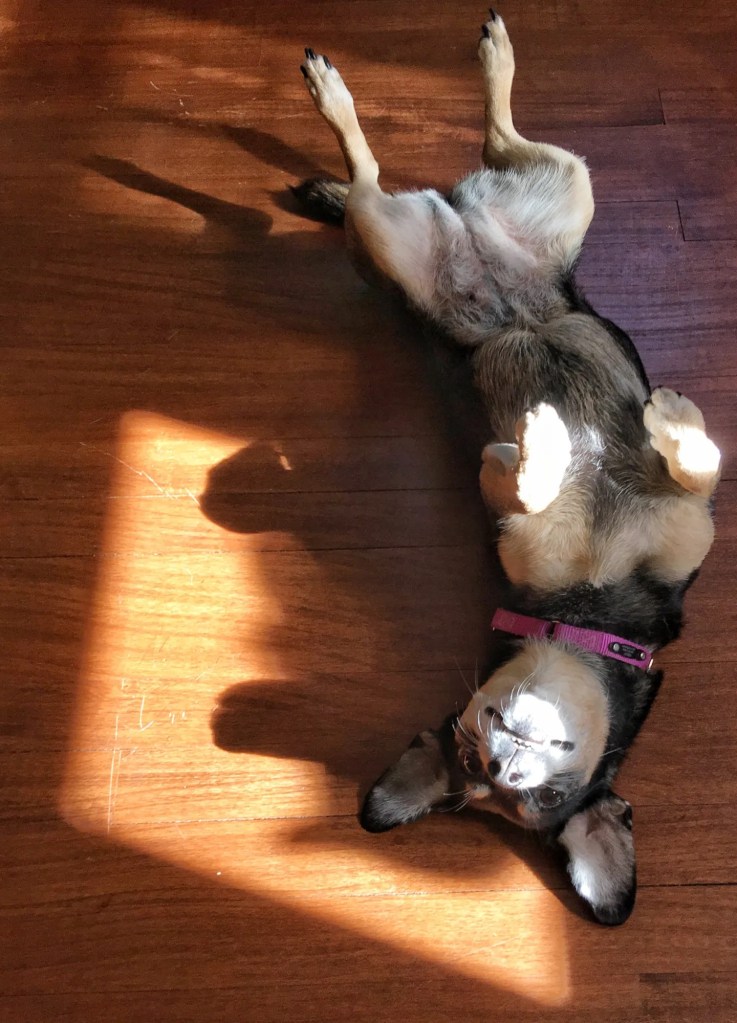
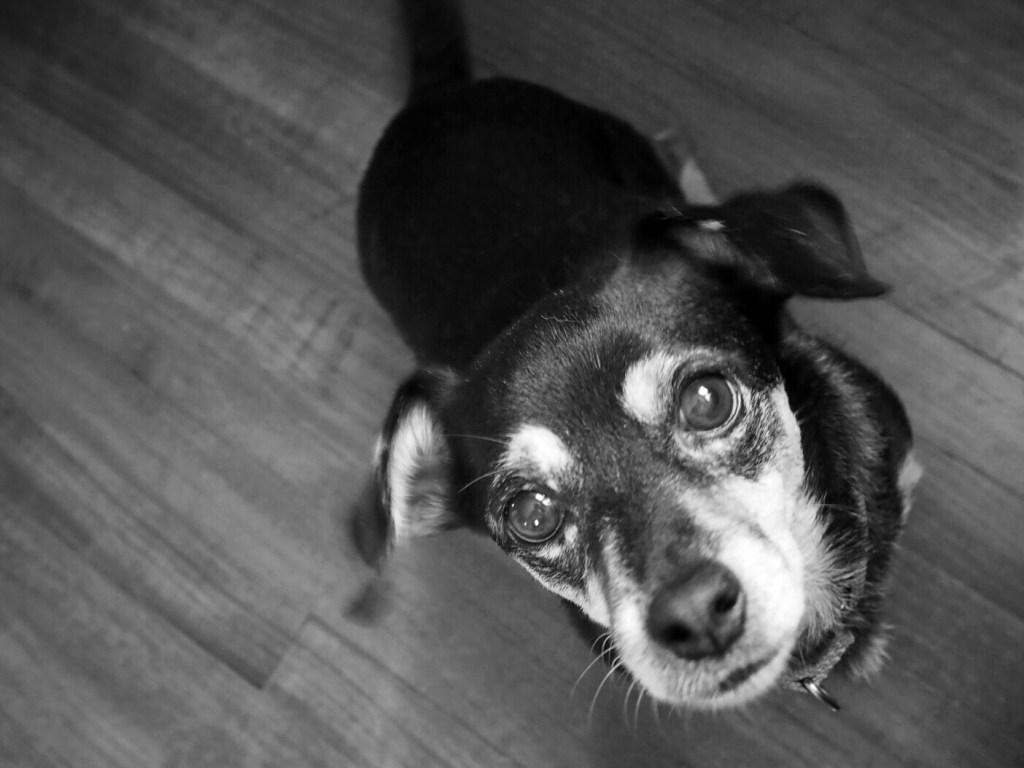
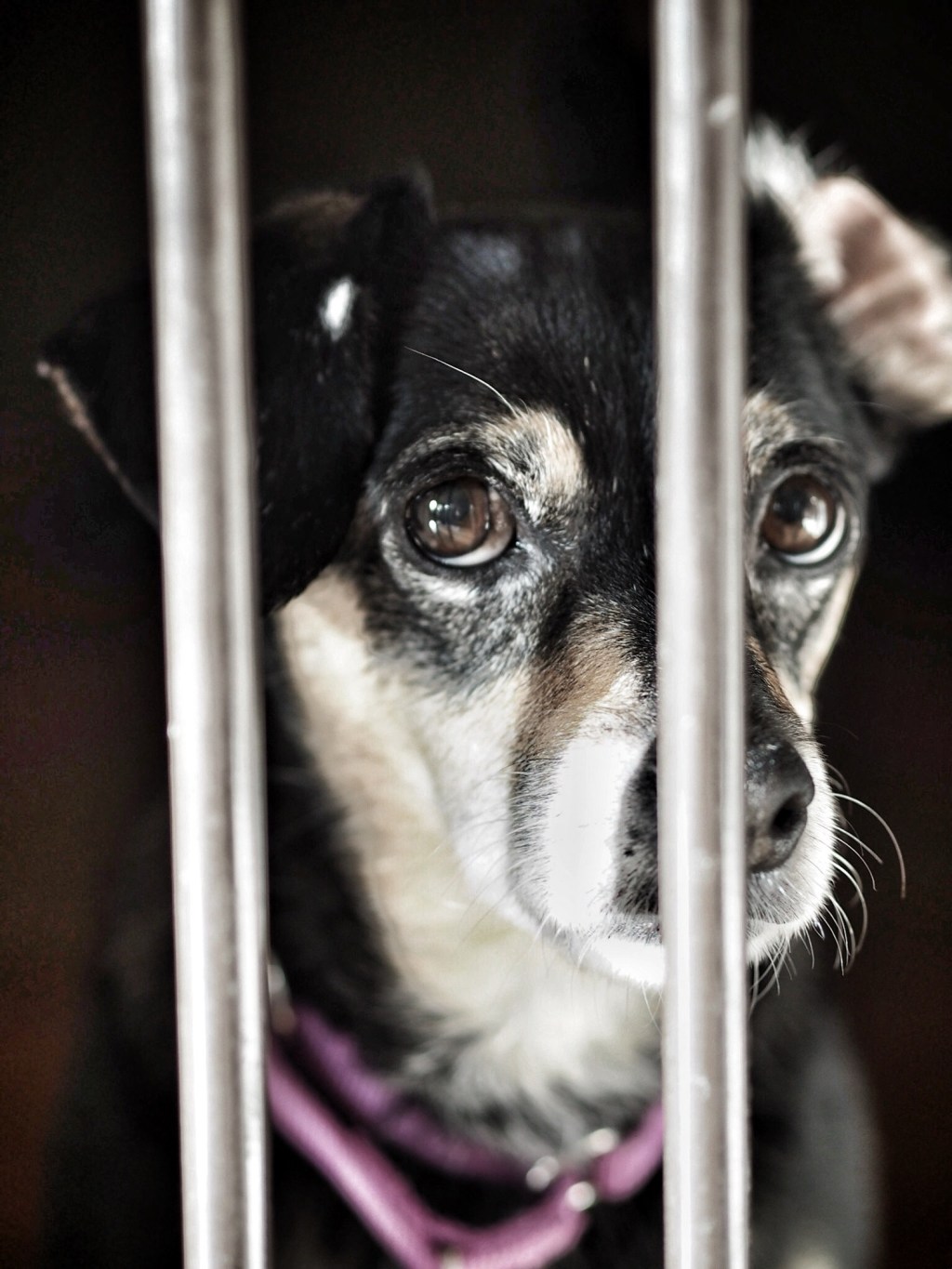
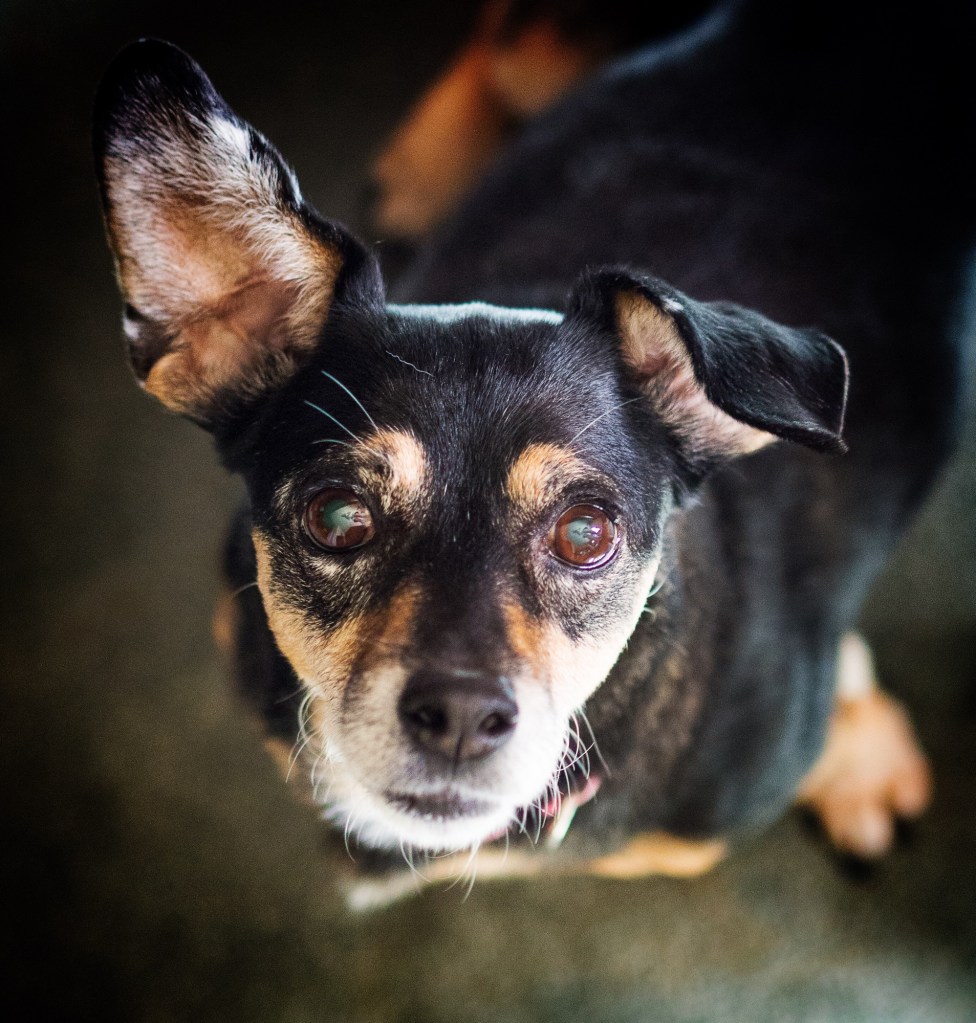
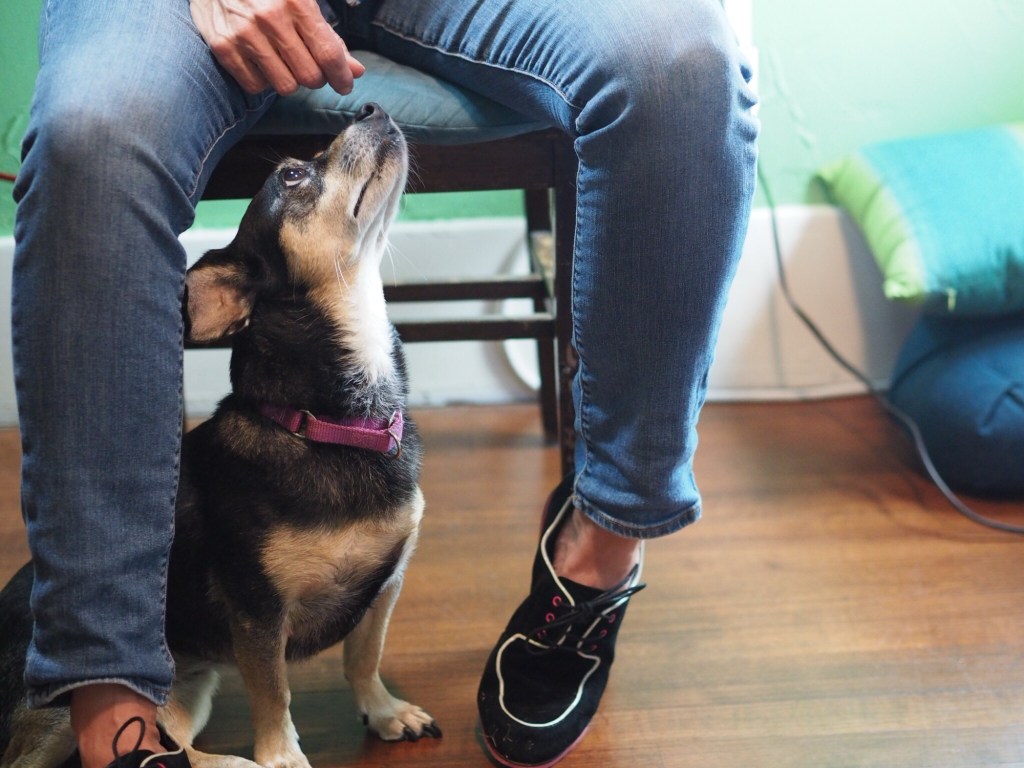
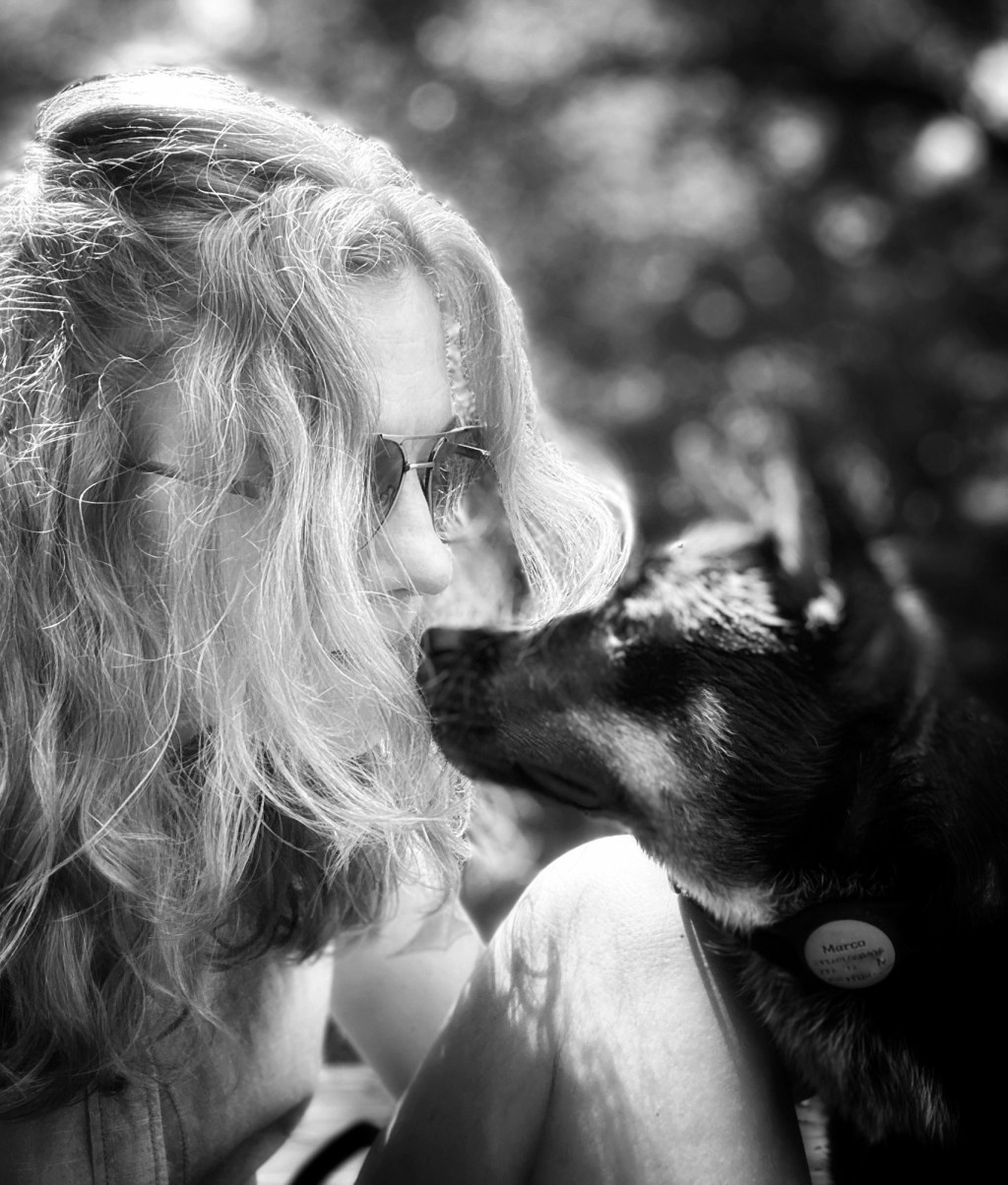
    And now there is Niblet, a black and tan terrier/chihuahua something-or-other who was already middle-aged when I acquired her. Though we are occasionally stopped by nice folks who want to pat Nib’s head and ask how old she is, for the most part we glide along unnoticed, a diffuse shape in the scenery that neither impresses nor amuses. We are happy companions in our invisibility, focused as we are on important matters: Nib studies the leftover aromas of other dogs, and I watch her as she works.

    What almost no one knows is that, behind those bug eyes, this dog is as noble as a phoenix or a Buddha. She will win no prizes for beauty or novelty, but she is making her mark on the world nonetheless, like a faucet drip eroding an enamel sink. And we grow stealthy and powerful on the outskirts of the world’s peripheral vision, accessories to, and for, one another, as we get on with the repetitively satisfying sensuality of everyday life.

  • My old dog’s nose: on equanimity and aging

    My two hound mixes have been dead for a couple of years now, and all I’m left with is this terrier-chihuahua something-or-other who occasionally looks more like a cartoon rendering than an actual dog. Battle-scarred, bug-eyed, and half-deaf, she’s adapted over the years by pushing more and more of her consciousness into her nose. 

    And so a walk that used to take ten minutes is now more like 25, not just because she’s slowed down, but because her world is contracting, like an old tunnel-shot in a silent movie, to the reach of her black, coat-button nose. But this is not a problem for her. In fact, she seems to enjoy coaxing and huffing each olfactory particle from its hiding place as much as she used to love chasing squirrels or barking at the mailman. Her world is shrinking, yes, but it is also expanding.

    Niblet finds lots to be crabby about. She wants her 6:00 supper at 4:30 (and also at 6.) She clearly blames me for fireworks and thunder, and rails against a certain white poodle in an undignified yellow raincoat who dares to cross her path. But she does not bemoan the injustice of an aging body that is, as we humans like to say, betraying her. She does not gnash her teeth at god or bore others with stories about the good old days when she could leap from sofa to chair in a single bound.

    Because Nib is not human — and so is oblivious to existential angst, the quest for meaning, and all that — she helps me be more human. Her incapacity for nostalgia about greener grass, bygone loves, or a once sexy, ungrizzled muzzle reminds me what a precious, two-edged gift existential reflection really is. I do not romanticize my dog’s in-the-moment simplicity, her childlike delight for each new day despite the physical insults and erosion. But I learn from her. 

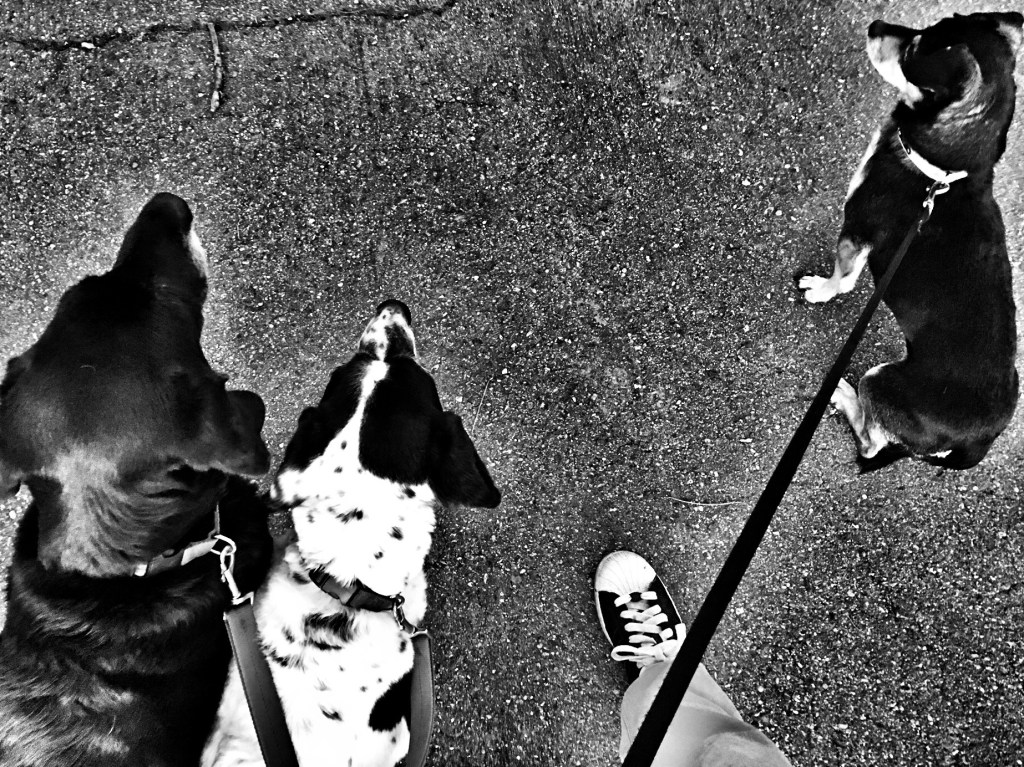
    I once tore through my neighborhood with three energetic mutts in tow, all of us pushing forward, always onward into the next moment. Now Nib leads me around the block, limping a bit as she carries her nose from tree to molehill to grass clump. And because there is nothing else to do and nowhere else to go — the days of hurrying are over — I watch her eyes flash with purpose and curiosity and her tiny nostrils flare. In those moments I enter her world and am fully alive in my nose too, as only an animal can be.